
Best Time to Drink Milk for Muscle Gain: An Endocrinologist's Guide to Smarter Recovery
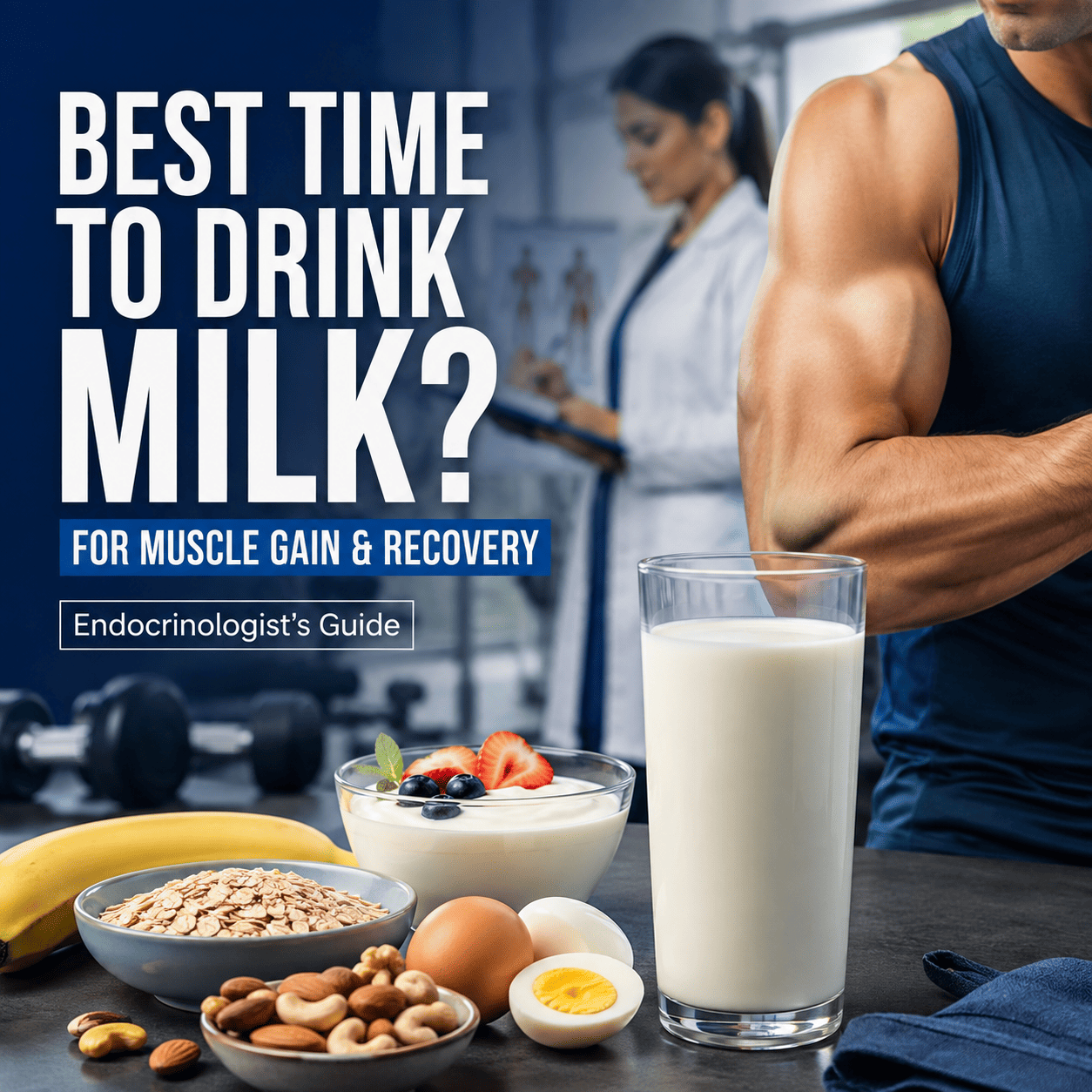
If you’re training hard and wondering when to drink milk for the best muscle-building results, you’re asking a good question, but it’s only half the picture. As a Senior Physician, Endocrinologist, and Diabetologist practicing across Delhi NCR, I look at milk not just as a fitness drink, but as something that directly interacts with your insulin, blood sugar, and hormonal balance. Understanding that connection is what separates a nutrition plan that builds muscle safely from one that quietly builds metabolic problems alongside it.
In this guide, I’ll walk you through the best times to drink milk for muscle gain, the hormonal science behind it, and, just as importantly, who should be more careful with dairy and why.
Why Milk Works So Well for Muscle Building
Milk is often called nature’s most “complete” recovery drink, and there’s good reason for that reputation. It naturally contains three things your muscles need at different points around a workout:
- High-quality protein – both fast-digesting whey and slow-digesting casein
- Natural carbohydrate (lactose) – for steady energy and glycogen refilling
- Electrolytes – sodium, potassium, and calcium for hydration and muscle contraction
This combination is what makes timing matter. Your body’s ability to use these nutrients efficiently depends heavily on insulin, the hormone that shuttles glucose and amino acids into your muscle cells. This is where my field, endocrinology, becomes directly relevant to your gym routine.
Best Time to Drink Milk for Muscle Gain
1. Pre-Workout (60–90 minutes before training)
Drinking milk before a workout gives your muscles a steady supply of fuel without the sugar crash you’d get from sports drinks or sugary beverages.
- Lactose digests gradually, offering sustained blood glucose release rather than a sharp spike.
- Circulating amino acids from milk protein are available to the muscle as soon as you start training.g
- Low-fat milk has a low glycemic index, which means a gentler insulin response compared to high-sugar pre-workout drinks.
A simple glass of low-fat milk or a small bowl of curd an hour before training works well for most healthy adults.
2. Post-Workout (Within 30–45 minutes)
This is where milk truly earns its reputation as a natural recovery drink.
- Milk’s roughly 3:1 or 4:1 carbohydrate-to-protein ratio closely matches what sports nutrition guidelines recommend for glycogen replenishment.
- Whey protein acts quickly, kick-starting muscle protein synthesis
- Casein protein digests slowly, feeding your muscles amino acids for several hours afterwards
- The natural sodium and potassium content supports rehydration — in some studies, milk has shown better fluid retention than plain water after exercise
For most people training for muscle gain, this post-workout window is the single most impactful time to include milk.
3. Before Bed
A glass of warm milk before sleep is a traditional Indian habit that also has some scientific backing. Casein protein consumed at night provides a slow, steady release of amino acids while you sleep, the period when a large share of muscle repair actually happens. This can be a useful addition for people training regularly, though it isn’t a replacement for adequate protein through the rest of the day.
4. Morning, As Part of Breakfast
Milk with breakfast is less about muscle timing and more about consistency; it helps meet your daily protein target and keeps energy steady through the morning. For most people, this is a supportive habit rather than a performance-critical window.
The Endocrinologist View: Milk, Insulin, and Muscle Growth
This is the part of the conversation most fitness content skips, and it’s where my clinical experience adds something different.
Every time you drink milk, your pancreas releases insulin to manage the lactose and amino acids entering your bloodstream. In a healthy, insulin-sensitive body, this process works efficiently; insulin helps drive glucose and protein building blocks into muscle cells, supporting recovery and growth. This is exactly why milk is such an effective recovery food for most active, metabolically healthy individuals.
However, in patients with insulin resistance, prediabetes, Type 2 diabetes, or PCOS/PCOD, conditions I manage every week in my practice, this same process behaves differently. Insulin doesn’t work as efficiently, blood sugar can rise higher than expected, and repeated post-workout dairy loading (especially flavoured or sweetened milk products) may work against, rather than for, metabolic goals.
This doesn’t mean people with these conditions should avoid milk. It means the timing, quantity, and type of milk matter more for them, and it’s worth having that conversation with a doctor who understands both muscle physiology and hormonal health.
Who Should Be More Cautious With Milk-Based Muscle Nutrition
As an endocrinologist and diabetologist, these are the patients I typically advise to be more deliberate about their milk intake and timing:
- People with Type 2 diabetes or prediabetes – lactose still raises blood glucose, and portion size and timing need individual calibration
- Individuals with PCOS/PCOD – dairy can influence insulin and androgen levels differently from person to person
- Those with hypothyroidism or hyperthyroidism – thyroid hormone affects metabolic rate and how efficiently the body uses the protein and carbohydrates in milk.
- People with lactose intolerance – digestive discomfort can undermine the very recovery benefits milk is meant to provide
- Those managing obesity or metabolic syndrome – overall caloric load from dairy needs to fit into a broader, personalised pla.n
If any of this sounds like your situation, it’s worth getting your fasting insulin, HbA1c, and thyroid profile checked before building your nutrition plan entirely around dairy.
Practical, Indian-Diet-Friendly Milk Options for Muscle Gain
You don’t need imported protein shakes to apply this science. Traditional Indian dairy foods work very well:
- Low-fat milk – simple, versatile, easy to time around workouts
- Greek yogurt or hung curd – higher protein, lower lactose, gentler on blood sugar
- Paneer – excellent post-workout protein source with minimal lactose
- Chaas (buttermilk) – light, hydrating, and easier to digest than full-fat milk
- Plain curd – a good bedtime option for slow-digesting casein
Choosing whole-food dairy over sweetened or flavoured milk products is one of the simplest changes that protects both your muscles and your metabolic health.
When Should You See an Endocrinologist?
Milk timing is a small piece of a much larger picture. Consider a consultation if you notice:
- Despite adequate protein and exercise, I am exhausted for no apparent reason.
- Despite consistent effort, it is tough to grow muscle or lose fat.
- Symptoms may include irregular periods, acne, or excessive hair growth, along with weight changes (perhaps due to PCOS).
- A family history of diabetes or a thyroid disorder.
- Blood sugar levels may be borderline or already high.
These are situations where a Senior Physician and Endocrinologist can look beyond diet timing and assess the underlying hormonal picture, insulin sensitivity, thyroid function, and metabolic rate that ultimately determines how well your body responds to nutrition and training.
About Dr Neha Gupta
Dr Neha Gupta is a Senior Physician, Endocrinologist, and Diabetologist based in Delhi NCR, with a clinical focus on diabetes management, thyroid disorders, PCOS/PCOD, obesity, and metabolic syndrome. Patients searching for the best endocrinologist in Delhi, Delhi NCR, Noida, or Ghaziabad often come to her not just for medication, but for a clear, evidence-based explanation of how their hormones, metabolism, and lifestyle choices, including everyday habits like milk timing, connect to their long-term health. Her approach combines careful clinical evaluation with practical, patient-friendly guidance suited to Indian diets and routines.
Book Online or Call: +91-9667134791
Frequently Asked Questions
Is it preferable to consume milk before or after a workout to increase muscle mass?
Both have value. Milk before a workout offers steady energy; milk after a workout supports glycogen refilling and muscle repair. For most people focused on muscle gain, the post-workout window has the strongest evidence behind it.
Can diabetics drink milk for muscle building?
Yes, but portion size, type of milk, and timing need to be individualised. Diabetics should monitor how milk affects their blood sugar and ideally get guidance from an endocrinologist or diabetologist.
Does drinking milk at night help muscle recovery?
Yes. The casein protein in milk digests slowly, providing amino acids overnight when much of the body's muscle repair takes place.
How much milk should I drink each day to build muscle?
This depends on your overall protein needs, body weight, activity level, and any existing metabolic conditions. A personalised assessment gives a far more accurate answer than a generic number.
Is milk suitable for people with PCOS?
It can be, but dairy affects insulin and hormone levels differently across individuals with PCOS. Some patients do better limiting dairy, while others tolerate it well; this is best assessed with proper evaluation rather than general advice.
When should I consult an endocrinologist about my diet and muscle-building plan?
If you have diabetes, prediabetes, thyroid issues, PCOS, or unexplained difficulty with weight or muscle gain, a consultation helps identify whether a hormonal factor is affecting your results.